BURST By Mary Otis

Publishes April 4, 2023-Zibby Books #3 – 280pp.- Literary Fiction

The Grateful Reader Review by Dorothy Schwab

A debut novel that spins the relationship between Charlotte and her daughter Viva like a tilt-a-whirl, slowly spinning at a sluggish speed then slamming the reader into the atmosphere. Bizarre behavior, sobering, accurate analogies, painful consequences, rare musical ear syndrome MES; rolled into a mother-daughter relationship over a lifetime of connection, mistakes, fond memories, and a mysterious missing father. Themes of mother-daughter relationships, mistakes, and seeking control intertwined at a maniacal pace. Triggers: addiction, abandonment

DESCRIPTION:

Viva has always found ways to manage her mother’s impulsive, eccentric, and addictive personality. She’s had to—for her entire life, it has always been Viva and Charlotte against the world. 

After accidentally discovering an innate ability for dance, Viva chases her new passion with the same fervor with which her mother chases the bottle. Over the years, Viva’s talent becomes a ticket to a life of her own, and as she moves further away from home to pursue her dream, Charlotte struggles to make peace with her own past as a failed artist and the effects of her addiction. When tragedy strikes, Viva begins a downward spiral and must decide whether she will repeat her mother’s mistakes or finally take control of her life. 

Mary Otis is the author of the novel, Burst, from Zibby Books, as well as the short story collection, Yes, Yes, Cherries (Tin House Books). Her stories and essays have been published in Best New American VoicesElectric Literature, McSweeney’s, Tin House, Los Angeles Times, Los Angeles Review of Books, and in many literary journals and anthologies. Originally from the Boston area, Mary lives in Los Angeles.

Coronation Year by Jennifer Robson

Publishing April 4, 2023-William Morrow-400pp

A royal-adjacent historical novel: Check out Jennifer’s Facebook page for all her posts and research: https://www.facebook.com/AuthorJenniferRobson/posts/pfbid02HfQxTE6EnjxNZLQN7WfuwQxnASM5SATE3eVhxiPmZZqhn8RP6m48pvT4YCBDhgMAl

The Grateful Reader Review by Dorothy Schwab

Jennifer Robson’s Coronation Year captures the thrill and majesty of the year leading up to Queen Elizabeth’s Coronation Day, June 2, 1953. Readers view the approaching day from three different perspectives. Main character Edie Howard, proprietor of the 400-year-old Blue Lion Hotel, is desperately trying to keep the hotel in the “black.”  News that the floundering hotel is right on the Coronation Day route might be the business boost Edie needs.  Two other Blue Lion residents that play an important role in the year leading up to Coronation Day are Stella Donati, Italian photographer and Holocaust survivor, and Jamie Geddes, a Scottish artist of Indian heritage, a war hero. Robson seamlessly threads their personal stories into Blue Lion activities and the planning of royal events.

Robson’s novel, like an English trifle, is one delicious layer after another. The foreboding nightmares, compelling memories, and catastrophic situations Stella and Jamie have endured are sweetened in the narrative by the genuinely compassionate, supportive nature of Edie. Robson convincingly reveals Edie’s anxiety and stress as Coronation Day plans begin to unravel. With the receipt of anonymous threatening letters, what was at first a hectic but jolly lead up to the big day takes a sinister, mysterious turn. Readers endure the weight and tension of the impending deadline stretching right up to Coronation Day.  

Robson’s descriptions of the parks, iconic buildings, and statues bring London to life as readers are swept into the hysteria and mass of humanity surrounding preparations and the ceremony itself.  As the new “telly” is installed in the Blue Lion lobby for residents and millions from around the world to view, throngs of royal followers are packed right out front, madly waving the Union Jack in wild anticipation of the queen in her golden coach.

Put on a pot of tea and get a glimpse of royal pageantry as a menacing mystery unfolds on June 2, the biggest day in 1953, Coronation Year.

“An academic by background, a former editor by profession, and a lifelong history nerd, I’m the author of seven novels set during and after the two world wars: Somewhere in FranceAfter the War is OverMoonlight Over ParisGoodnight from LondonThe Gown, Our Darkest Night, and Coronation Year. I was also a contributor to the acclaimed anthology Fall of Poppies: Stories of Love and the Great War.

I was born and raised in Peterborough, Ontario. I studied French literature and Modern History as an undergraduate at King’s University College at Western University, then attended Saint Antony’s College at the University of Oxford, where I obtained my doctorate in British economic and social history. While at Oxford I was a Commonwealth Scholar and SSHRC Doctoral Fellow.

I live in Toronto, Canada, with my husband and children, and share my home office with Bonnie the sheepdog and her feline companions Mika, Rachel and Obi.

My photograph was taken in September, 2022 by Megan Preece.”

Murder in Postscript by Mary Winters

Publishes March 28-Berkley-Historical Mystery-320pp.

Grateful Reader Review by Dorothy Schwab

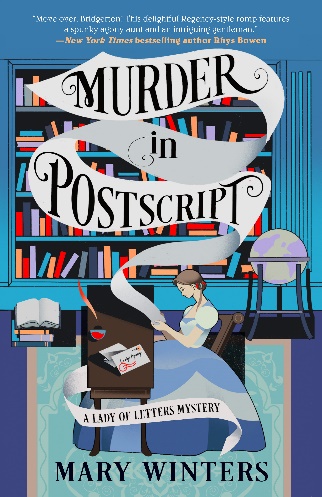
Mary Winters sets her newest novel, Murder in Postscript, in Victorian England. Amelia Amesbury, the lovely widow, mother, and countess, is the main character in the first of the Lady Agony Mystery Series.  Amelia, pen name Lady Agony, writes secretly for a London penny paper dishing out advice on topics from fashion to social faux pas. She waits anxiously for the post each day so she can retreat to the two-story library in the home she shared with her late husband Edgar and his young niece, Winifred, now like a daughter. The day Lady Agony receives a letter from a lady’s maid pleading, “I think my mistress was murdered,” is the day Lady Agony turns to solving a murder instead of giving advice.

Mary Winters’ characters are either likeable or unlikeable. Readers meet Amelia’s Aunt Tabitha, who is mostly unlikeable due to her overbearing attitudes regarding widowhood and constant comments to behave; reminding Amelia she has married into gentry and must meet certain expectations. Nagging and disapproving looks are her specialty. In contrast to Tabitha is the extremely likeable Lord Simon Bainbridge. He’s easy going, well mannered, and has a surprising, even unnerving sense of humor. As Winters “who done it” plot unfolds, she cleverly weaves an intricate trail for Amelia and Simon to follow as they attend costume balls, traipse to the London docks, and visit a crazy aunt in her English garden. While tracking down clues the Simon/Amelia relationship continues to ebb and flow while visiting chocolate shops and in carriage rides, keeping readers hopeful as they share empathy for each other’s pasts.

Each charming chapter opens with a letter to Lady Agony and the pearls of wisdom she so forthrightly imparts. With Winnifred’s recital to host and a killer still on the loose, Lady Agony’s last bit of advice is “do less and enjoy more!”  So, mind your manners and read Murder in Postscript, the first in The Lady Agony Mystery Series.

“Trust me.” Yours in Secret, Lady Agony

Murder in Postscript by Mary Winters

Publishes March 28-Berkley-Historical Mystery-320pp.

Excerpt

Winifred gave Amelia an impulsive hug, and Amelia breathed in the beautiful strawberry scent of the child. Edgar hadn’t given her love—­he wouldn’t risk passing on his degenerative condition— ­but he had given her his dear niece, and for that, Amelia would always be grateful.

When the girl was gone, Amelia took the letters into the library, her favorite room in the house. It was something else Edgar had given her that she’d enjoyed very much—­a home with books. While the Feathered Nest had plenty of room for dining and entertaining, it did not afford much room for books, just the special theatricals the family loved and performed. One of her favorite performances was Romeo and Juliet, probably because she and Grady were central characters. Most times her eldest sister, Penelope, took the lead roles. Indeed, Penelope was better at memorizing lines, but Amelia was better at improvising.

She stopped and inhaled a breath. The room smelled of cloves and paper and past cigars. Hundreds of leather-­bound tomes filled the wooden bookshelves that lined the two-­story room. She bypassed the books and made for the large rosewood desk, situated in a bright alcove of windows. It faced a dark green couch, striped chairs, and an ornate oval table. In a nearby corner was a smaller table, with heavy crystal glasses and fine liquor. And on the far wall was a grand stone fireplace, surrounded by two soft damask chairs, comfortable enough for reading and dozing. She’d spent many nights there doing just that.

Slice went the letter opener, revealing the contents for her eyes only. She scanned the penmanship: hurried, sloppy, and slightly smudged from tears. Definitely a relationship problem. Settling into her chair, she began to read the letter.

Dear Lady Agony,

You are a lady of repute. Please tell me what to do. I love the boy next door, but he’s unaware of my feelings. I am certain we possess a special bond, for he smiles at me so. But he’s going to ask another girl to marry him. He told me his plan on the way to the well. I stumbled away, confused, but how I longed to tell him the truth of my feelings. Am I too late?

Devotedly,

Too Late for Love

Amelia dunked her quill in the ink. This one was easy, a drop in the bucket of love letters. She began her response, which would be printed in the magazine. Readers’ letters weren’t included, and a good thing, too. Amelia had a feeling many writers would be embarrassed later by the emotion they’d poured into their requests.

Dear Too Late for Love,

It’s never too late for love. In fact, I prefer the old, and perhaps wiser, adage, Better Late than Never. In your case, it cannot be truer. You love the boy and are late to admit it. Yes. However, there is still time. He hasn’t asked anyone to marry—­yet. Best he knows your true feelings before he proceeds. Even if he does not reciprocate them, you will feel secure in the knowledge that you told him. And that is a feeling you can live with. The other is not.

Yours in Secret,

Lady Agony

The next letter was just as clear-­cut. It was from a reader who was jealous of her friend’s hair, though she didn’t say so outright. The letter accused the friend of spending too much time dressing her long, blonde, thick locks, but it was obvious to Amelia that the letter writer wished for the hair herself.

Another dunk into the inkwell, and Amelia was poised to respond.

Dear Hair, There, and Everywhere,

Some women are born with great hair. Others are born with great wit, vivacity, or kindness. Cultivate one of the latter. Or purchase a wig. The choice is just that simple.

Yours in Secret,

Lady Agony

She waited a moment before opening the last letter, savoring the unknown contents. It would be tomorrow afternoon before she received more letters, the mysteries that made up her day. Because of the popularity of the column, Grady made certain the letters arrived daily so that she wouldn’t fall behind.

She turned the envelope over in her hands, positioning it in front of the light. A few drops of spring sunshine shone through the windows, making burgundy flecks on the wall as it bounced off the nearby decanter of brandy. Soon a housemaid would be in to start a fire, to warm the chill brought on by the late afternoon. Then Amelia would enjoy a glass of sherry before dressing for dinner, a complicated affair that she had never quite mastered.

She noted the seal of the envelope had been hastily done. Dashed out at the last minute, perhaps, the letter might contain time-­sensitive information. Amelia unfolded the paper. The handwriting, no better than chicken scratch, was hard to decipher. Written at a slant, possibly in this morning’s rain burst, it was wrinkled and marked. Yet the writer’s desperation was clear from the first sentence. Amelia scanned the letter twice before dropping her quill, splattering ink on the desk. She grabbed her spectacles and read it a third time. Her eyes must be deceiving her. It was indeed dated this morning.

Dear Lady Agony,

You are my last hope, for I have nowhere else to turn. Could you meet me at St. James’s Park at nine o’clock this evening? Make sure no one follows you. I believe someone is following me. I’ll be at the bench by the pond. You will know me by my red hat. Please make every effort. I’ve witnessed something dreadful, and I fear the worst.

Devotedly,

Charlotte

Postscript: I think my mistress was murdered.

Excerpted from Murder in Postscript by Mary Winters Copyright © 2023 by Mary Winters. Excerpted by permission of Berkley. All rights reserved. 

Two Wars and a Wedding by Lauren Willig

Publishes March 21, 2023-William Morrow-448pp.

Grateful Reader Review by Dorothy Schwab

Lauren Willig’s dual timeline novel is set during the 1896 Greco-Turkish War and the 1898 Spanish-American War. Betsy Hayes, a Smith College graduate, and aspiring archaeologist is denied a place on the excavation team at the American School of Classical Studies at Athens. The director suggests she become a librarian instead. This ignites Betsy’s quest to prove that women can indeed, dig and involves “two wars and a wedding.”

These two wars are the backdrop for Lauren Willig’s coming of age story. Through reams of research Willig sinks readers into the prejudices true to the late 1800’s. Main character, Betsy Hayes is an amalgam based on real life women Harriet Boyd Hawes and Janet Jennings. At the emotional core of the novel are Betsy, her best friend Ava, and aspiring journalist, Kit. Willig focuses on how these American women are striving to take their place in the world and how each responded socially and politically to war. Keeping readers aware of the timelines and actions are the especially appealing openings of each chapter; Kit’s dispatches to the St. Louis Star or Betsy’s letters to “Darling Ava.”

Adept at conflict that reveals winners and losers Willig exposes political conflict between the U.S. Army and Clara Barton. Compelling details of dire situations on ships and battlefields, supported by newspaper accounts and reports by doctors who traveled with Clara Barton and the American Red Cross, are seamlessly woven into the narrative. Amazing, true accounts of Clara Barton being snubbed, turned away while soldiers were dying, or told women didn’t belong in the field were taken from the historical record. Willig’s meticulous research also documents the Rough Riders and Roosevelt in various battles depicting the experiences and confusion of the men in the field during the Spanish-American War.

Lauren Willig masterfully tells the story of women fighting for what is right by sharing a saga of friendship and love woven through Two Wars and a Wedding.    

Lauren Willig is the New York Times and USA Today bestselling author of more than twenty works of historical fiction, including Band of SistersThe Summer CountryThe English Wife, the RITA Award-winning Pink Carnation series, and four novels co-written with Beatriz Williams and Karen White. Her books have been translated into over twenty languages, picked for Book of the Month Club, awarded the RITA, Booksellers Best, and Golden Leaf awards, and chosen for the American Library Association’s annual list of the best genre fiction. An alumna of Yale University, she has a graduate degree in history from Harvard and a JD from Harvard Law School. She lives in New York City with her husband, two young children, and vast quantities of coffee.

Strangers in the Night by Heather Webb

Publishes March 21, 2023-William Morrow-432pp

Grateful Reader Review by Dorothy Schwab

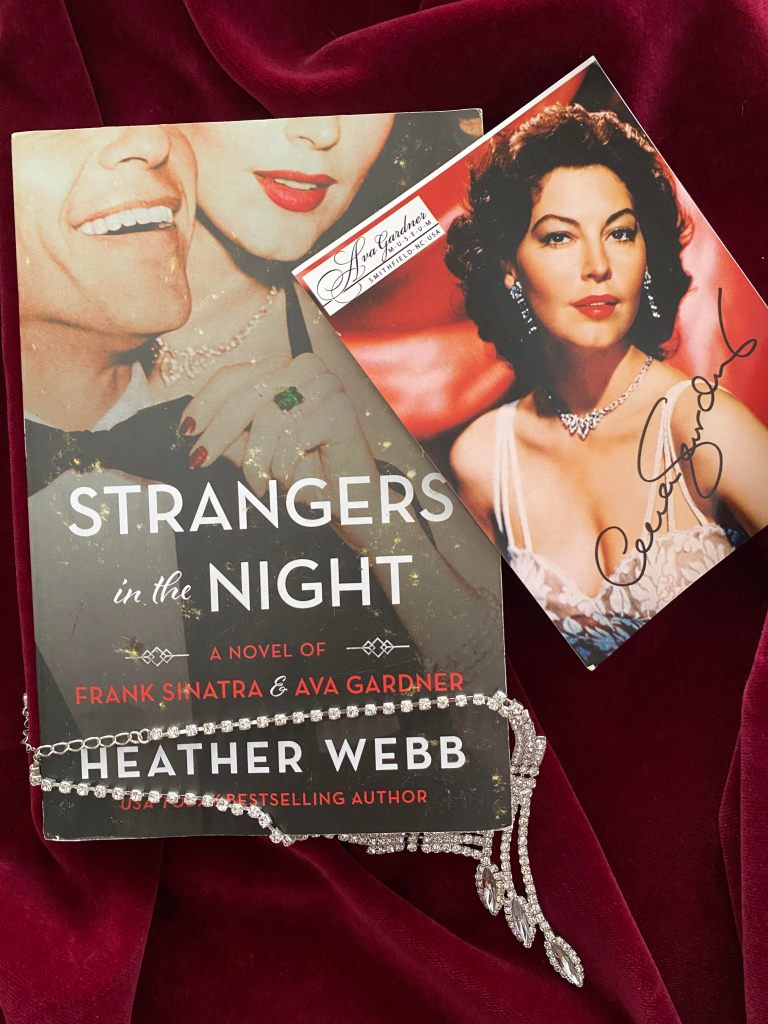
Heather Webb’s Strangers in the Night paints a portrait of Frank Sinatra and Ava Gardner’s tumultuous relationship with bold, startling strokes layered with tender, revealing highlights. With massive amounts of resources and meticulous research Webb creates a biographical novel that reads like a diary, told alternately from Frank and Ava’s point of view. Readers cross countries with Ava, Frank usually following, from America, to England, Africa, and Spain. The years spanning the 1940’s to 1960’s cover their individual highs; marriages, movies, and enormous achievements, and lows; deaths of friends, divorces, and attempted suicides.

Heather Webb’s characters are portrayed in situations with intense emotional dialogue and interactions, including fights, breakups, and making up! It’s exhausting to imagine that Frank and Ava lived and loved for so many years riding on such a rollercoaster of feelings and events. Webb entwines the drastic swings in their relationship contrasting heartwarming strolls along the sidewalks of NYC at Christmas with loud, disturbing arguments in restaurants along with pages, and pages more of loving or volatile adventures; all of which involve copious amounts of alcohol.

Heather’s recounting of Frank and Ava describing each other is especially inciteful for readers. Frank on why he fell in love, “It was how she wore her beauty; her intelligence, wit, and generous laugh.” And Ava described Frank as “raucous and edgy but tender, passionate, loved music, books, and art.” Both really simple and tender at heart.

While strong, independent Ava’s career is blossoming Frank’s is faltering. Hollywood friends like Howard Hughes, Humphrey Bogart, Lauren Bacall, and Grace Kelly have positive and negative impacts on their relationship and careers.

Frank and Ava made over sixty movies each, so plenty of viewing choices. After reading Strangers in the Night, do add Frank’s From Here to Eternity and Ava’s Mogambo to your watch list. Next choose a Frank Sinatra playlist to imagine Frank telling Ava one more time, “I love you, baby”. 

Women Are the Fiercest Creatures by Andrea Dunlop

Zibby Books #2- Publishes March 7, 2023-272pp.

Grateful Reader Review by Dorothy Schwab

Andrea Dunlop’s Women Are The Fiercest Creatures, set in Seattle, opens with a quick overview of Jake Sarnoff’s life as CEO of STRANGERS, a startup company on social media connecting people through common community engagement. Dunlop quickly engages readers with a “missing baby” scene and then flashes back 8 months to complete the backstory of Jake’s company, his college friend and cofounder, and the woman involved in helping to build the company. Dunlop creates suspense and anticipation as the women in Jake’s life deal with remorse over past and present decisions, conviction believing they’ve done the right thing, and coping with the outcomes. At the novel’s heart is making choices and proving that author, Andrea Dunlop is indeed correct, Women Are the Fiercest Creatures.

Book Summary

In this wildly addictive novel, three overlooked women take on the charming, manipulative tech CEO who wrote them out of his startup’s history.

Anna Sarnoff is still reeling from her quickie divorce from tech wunderkind Jake Sarnoff. Forced out of the company that she helped Jake build, Anna is trying to pick up the pieces of her life, navigating the waters of solo parenting their two teenage boys and adapting to her new role of ex-wife. To make things more complicated, Jake seems to want her back…and his persuasiveness tempts her to say yes.

Across town, the brilliant and striking Samanta Flores-Walsh, Jake’s college girlfriend, is busy raising her teenage daughter and running her thriving yoga studio. Although their relationship ended years ago, unanswered questions from their time together gnaw at her, and when she learns that Jake is planning to take his billion-dollar company public, she starts to wonder if perhaps it isn’t too late for justice.

Finally, there’s Jake’s much younger new wife, Jessica, who’s struggling to stay afloat as a new mom while her high-profile husband grows increasingly distant.

Set in the wealthy enclaves of Seattle’s tech elite, the lives of these three women grow entangled as long-held secrets are forced to the surface, threatening to destroy their families. Written with razor-sharp intelligence and heart, Women Are the Fiercest Creatures is a searing look at the complexities of family and the obstacles women navigate in every aspect of their existence.

Order WATFC: https://www.amazon.com/Women-Are-Fiercest-Creatures-Novel/dp/1958506001

Andrea Dunlop: https://www.simonandschuster.com/authors/Andrea-Dunlop/500931454

Andrea Dunlop is the author of We Came Here to ForgetShe Regrets NothingLosing the Light, and Broken Bay. She lives with her husband in Seattle, Washington, where she works as a social media consultant.

The Lost English Girl by Julia Kelly

Publication March 7, 2023; Gallery Books, 416pp, Historical Fiction

An epic saga of love, motherhood, and betrayal during World War II

The Grateful Reader Review by Dorothy Schwab

The Lost English Girl by Julia Kelly is based on a family story handed down through her British mother’s side of the family. Set in Liverpool, England, on the brink of World War ll, Kelly examines the daily life and choices of Viv Byrne, Catholic, and Joshua Levinson, Jewish, in alternating points of view.  Viv wants to escape her strict mother’s scrutiny and Joshua dreams of playing saxophone in a band, not becoming a tailor like his father.

At the emotional core of the novel readers are immersed in the social and religious situations facing Viv and Joshua. Each family plays a prominent role in how independent decisions impact others as Viv and Joshua deal with responsibility and duty. The internal and external conflict of Kelly’s characters builds as the war continues. Viv is dealing with separation, becoming a “bread winner” and finding her voice while Josh copes with being a foreigner in the U.S.  and guilt related to his decisions.

Beginning September 1, 1939, approximately 1.5 million children were relocated to the English countryside for protection from bombing strikes. Known as Operation Pied Piper this political and historical account of parents sending their children away connects readers to Viv as she is faced with making gut wrenching decisions. Kelly explores the psychological impact of the evacuation on children through the lens of Catholic and Jewish families. She sites abandonment issues, including anger, rejection, disappointment, and the pains of family reunification after years of separation.

Through the war years Viv and Joshua grow and change in many ways readers will appreciate. Kelly introduces conflict between characters that creates emotional angst; specifically, a priest that Viv’s family relies on and actions of Viv’s sister, Kate. Their questionable choices are in direct contrast to Joshua’s father. Kelly’s depiction of Mr. Levinson’s empathy and extreme sensitivity to Viv and her feelings makes him an absolute role model and a bridge to current social and religious climates.

Through this harrowing story readers will feel empathy for families fleeing the Ukraine when Russia invaded in 2022. The Lost English Girl– a story of choices and how much the human spirit can withstand to find ways back to those we love.

OPERATION PIED PIPER

#1: The children assembled at school at 5am on Friday 1 September 1939. This photograph shows evacuees and adults walking along a street carrying suitcases and gas mask boxes. Some of the adults are wearing arm bands which identify them as volunteer marshals. © IWM (D 1939A)

#2: A small boy carrying his luggage as he left London for the country with a party of other evacuees on 5 July 1940. © IWM (HU 55936)

#3: Evacuees wearing their gas masks in Montgomeryshire, 1939

EXPLORE MORE!

The evacuation of children during the Second World War: https://www.thehistorypress.co.uk/articles/the-evacuation-of-children-during-the-second-world-war/

Child Evacuees in the Second World War: Operation Pied Piper at 80: https://history.blog.gov.uk/2019/08/30/child-evacuees-in-the-second-world-war-operation-pied-piper-at-80/

The Maid of Ballymacool by Jennifer Deibel

Publication February 21, 2023-Revell Christian-Historical Fiction, Romance-352 pp

The Grateful Reader Review by Dorothy Schwab

An enchanting Cinderella story that keeps readers hoping for that ‘happily ever after.’ The setting for Jennifer Deibel’s The Maid of Ballymacool is Ireland, 1935. She has included all the necessary characters for a fairy tale set in the twentieth century. Main character, Brianna Kelly is the abandoned baby left on a doorstep with directions for her care. The stepmother role is played by rejected Maureen Magee, headmistress of the Ballymacool House and Boarding School for Girls; where baby Brianna is condemned to a lonely, rootless life of solitude. Brianna’s only friend is Finnuala, a wise, auld woman who lives in the woods where Brianna escapes to find peace and beauty; away from the beatings and abuse she receives from the dreaded Magee. From what seems like another world and yearning for a purposeful life, comes the handsome prince, kind, compassionate, book lover Michael Wray of nearby Castle Wray. Michael is sent to help discipline his obnoxious, ill-mannered cousin, Adeline, a boarder at Ballymacool; a well written bratty character to dislike.  The only link to Brianna’s past is a chain with a pendant bordered with fleur de lis and hand carved letters on the back.

Jennifer Deibel deftly weaves mystery and romance into this tale along with lush descriptions of Castle Wray; its history, its grounds and Ballymacool’s aging, dreary interiors but peaceful surrounding woods. As the mystery unfolds between the House of Ballymacool, the guest cottages, and the woods, the characters slowly develop fresh hope, trust, and a need for forgiveness.  Securing the bonds of family and the importance of finding one’s true identity are key themes that make The Maid of Ballymacool a delightful, fulfilling Cinderella story.  

Jennifer Deibel is a middle school teacher and freelance writer. Her work has appeared on (in)courage, on The Better Mom, in Missions Mosaic Magazine, and others. With firsthand immersive experience abroad, Jennifer writes stories that help redefine home through the lens of culture, history, and family. After nearly a decade of living in Ireland and Austria, she now lives in Arizona.https://www.jenniferdeibel.com/

A Mother’s Hope for the CORNISH GIRLS

Publication February 16, 2923-Avon Books UK – Avon, 382pp

Preorder Book #4: https://www.amazon.com/Mothers-Hope-Cornish-Girls-heartwarming-ebook/dp/B0B5NRC3B6
Links to Books in the series below

The Grateful Reader Review by Dorothy Schwab

The lasting impact war and motherhood has had on the beloved girls of Cornwall is the focus of book #4 in Betty Walker’s Cornish Girls series. The Cornish girls are ‘doing their bit” at home in 1943 while sons, fathers, lovers, and friends have left to serve Britain during World War ll. Walker quickly engages readers with Lady Symmond’s announcement of her impending marriage and move to Scotland. From this point on readers are immersed in the lives of the Cornish girls; their angst, fears, worries, nightmares, and dreams for a future with their loved one at war. Some marry and become expectant mothers, some find purpose in caring for orphans or for wounded soldiers in the convalescent home. One is a mother with a son whose father is missing in action. Each of Betty Walker’s endearing mothers of Cornwall find hope in supporting one another. The mothers and the readers learn that “Love is what we fight for. That, and the next generation.” A heartwarming way to spend an afternoon with a cup of tea, while looking forward to Book #5: A Wedding for the Cornish Girls.  

BOOK DESCRIPTION BY AVON :

Can the bonds of motherhood give them the strength they’ll need to get through the war? St. Ives, Spring 1943. After having given up her baby at seventeen, Sonya is inspired by her work at the orphanage to discover what happened to her daughter twenty-five years ago. Reunited, they struggle to bond whilst braving the war together. Nurse Lily has returned to St Ives to finish training as a midwife. But when old flame Tristan is brought in wounded, she realises she must put the past in the past to care for him, and perhaps then she’ll realise her own dreams of motherhood… And working at Tristan’s convalescent home, Mary longs for the romance she reads of in her novels. But her overprotective mother is making that hard for Mary at every turn…In times of war, the Cornish Girls can rely on one another to make it through. But can they lean on the bonds of motherhood for support too?