Publication Day! Sunflower Sisters by Martha Hall Kelly

Martha Hall Kelly’s million-copy bestseller Lilac Girls introduced readers to Caroline Ferriday. Now, in Sunflower Sisters, Kelly tells the story of Ferriday’s ancestor Georgeanna Woolsey, a Union nurse during the Civil War.” Google Books

Martha grew up in Massachusetts and now splits her time between Connecticut and New York City. She worked as an advertising copywriter for many years and raised three splendid children, while researching and writing Lilac Girls, her first novel. She has loved writing the other two books about Caroline’s family, Lost Roses, which features Caroline’s mother during WWI and Sunflower Sisters, a Civil War novel due out March 30, 2021. You’ll find more info about the incredible, true stories behind both books at her website: http://www.marthahallkelly.com and backstory about all three novels on her ever-changing Pinterest page. 

Grateful Reader Review by Dorothy Schwab

Sunflower Sisters is the long-awaited conclusion to the Woolsey family saga featured in Martha Hall Kelly’s Lilac Girls and Lost Roses.  The Civil War and the issue of slavery in the North and South becomes the backdrop for this final and epic drama.

Sunflower Sisters unfolds from three points of view. Representing the Woolsey family is Georgy, Caroline Ferriday’s great-aunt; a patriotic Union nurse, determined to “rid the country of the scourge of slavery.” Georgy’s father, part of the Underground Railroad, died leaving 7 children for Mother Woolsey to raise.  Georgy’s chapters are woven with details of the lives of each of the six girls and son Charley. Martha Hall Kelly’s impeccable research using family letters gives realistic insight into daily activities and feelings of family members. A Woolsey family tree helps readers keep the siblings in order as the descriptions are read with “eyes peeking through fingers” of battles raging between armies, surgeries and diseases fought in hospitals.

Juxta positioned to the Woolsey family is Jemma, an enslaved girl on the tobacco growing Peeler Plantation, in the border state of Maryland. Jemma’s twin sister, Patience, works at neighboring Ambrosia, an indigo plantation. Readers will be breathless reading of the sisters’ escape plans and routes through the swamps, involving the monster overseer, LeBaron.  Jemma’s skills came from her owner, brave Aunt Tandy Rose, who taught her manners, and how to read and write.  Housemaid Sally Smith, the “root doctor,” shared her wealth of knowledge regarding herbs, healing plants, vegetables, and especially making jelly! The trials and tribulations of Jemma are difficult to read, but her tenacity and courage, along with her creativity and wit help her survive the brutalities and family traumas. Readers are blessed to know Jemma learns to love and be loved.

The third voice is that of Anne-May Wilson Watson, age 25, the Peeler Plantation mistress. Anne-May is a snuff addicted, self-centered, “mean as a witch” woman that readers will immediately move to the “character to hate” pile! MHK gives a vicious, spiteful, nature to this woman who deserves all she gets. Enough said about this awful woman. One more word: greedy.

From the opening scene of a slave auction in 1859, Charleston, South Carolina through battles at Richmond, Antietam, Chancellorsville, Vicksburg, Chickamauga and Gettysburg-readers will experience the emotional toll of the Civil War. Between 1859-1864 there will be balls and weddings, hangings and battles, fairs and funerals. But in the end, there are reunions to soothe the soul and mend broken hearts. The Sunflower symbolism is a hidden secret for readers of Sunflower Sisters. 5 stars. GR

The Woolsey Family Tree

The Kew Gardens Girls by Posy Lovell

A heart-warming novel inspired by real life events, about the brave women during WWI who worked in the historic grounds of London’s Kew Gardens.

Posy Lovell is a pseudonym for British author and journalist Kerry Barrett. Born in Edinburgh, she moved to London as a child with her family. She has a passion for uncovering the role of women in the past. She lives in London with her family and is the author of The Kew Gardens Girls.
 

Grateful Reader Review by Dorothy Schwab

“The glory of gardening: hands in the dirt, head in the sun, heart with nature. To nurture a garden is to feed not just on the body, but the soul.” Alfred Austin

The Kew Gardens Girls combines the “glory of gardening” with the glory of love, friendship and forgiveness. Posy Lovell’s three main characters who answer the ad for gardeners at London’s Kew Gardens in June,1915, are each hiding from loss and heartache. Louisa, at 35, escaping an abusive husband in Kent, flees to London in order to establish anonymity. Ivy, sixteen, compensating for her shameful conduct as a rebellious teenager, wants to be near Jim, assistant to the supervisor at Kew.  First to be hired by supervisor Mac is sweet natured, gentle Bernie who is suffering personal humiliation from a past relationship and his pacifist beliefs. He knows nothing about gardening, but he IS a man. Mac must overcome reservations about women working at Kew Gardens, along with personal disappointment.

Readers will learn about World War I, the Conscription Act, Suffragettes, and the effects these each had on the early workings of London’s Kew Gardens. Posy Lovell’s characters are developed through reflection and slowly learn to share thoughts and feelings with each other, finally revealing personal truths and growing bonds of friendship. Examples of forgiveness, mentoring, trust, handling of grief through generosity and genuine care for others are character traits lovingly cultivated in The Kew Garden Girls. A bonus for poets and gardeners is the language of flowers Ivy weaves through the tasks of weeding and planting the ‘miles” of herbaceous flower beds.  A bouquet of daisies, roses, and fern fronds from the Grateful Reader. (Language of flowers code in link below.)

1911 Map of Kew Gardens

What does each flower symbolize? Which flowers represent love, hope, healing, loss, and good luck? See the Almanac’s complete list of Flower Meanings and Plant Symbolism. Whether you are picking out a flower bouquet for a wedding, choosing a single flower for a loved one, or planting a garden, discover the secret language of flowers! This site has a fabulous chart! https://www.almanac.com/flower-meanings-language-flowers

Under the Light of the Italian Moon by Jennifer Anton

Jennifer Anton is an American/Italian dual citizen born in Joliet, Illinois and now lives between London and Lake Como, Italy. A proud advocate for women’s rights and equality, she hopes to rescue women’s stories from history, starting with her Italian family.

A promise keeps them apart until WW2 threatens to destroy their love forever

A beautiful trailer for the book: https://www.youtube.com/watch?v=2Vjee6D7b8Y

The Grateful Reader Review by Dorothy Schwab

Under the Light of the Italian Moon is inspired by the true story of the strong women in Jennifer Anton’s Italian family. Listening first to the videos of Jennifer telling the background story of how this novel came to be, the amazing women that inspired it, and the valuable research and coincidences in Italy; will add a tremendous level of understanding as the saga unfolds. https://www.instagram.com/boldwomanwriting/channel/?hl=en

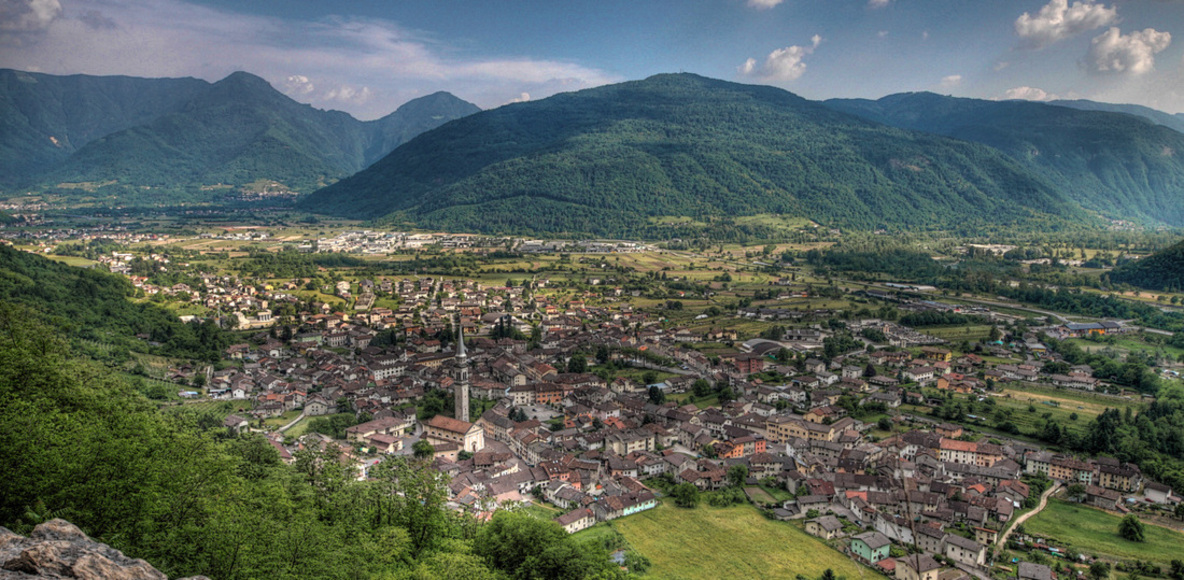
Adelasia Argenta is the heartbeat of her family in Fonzaso, Italy, where Mount Avena and Dolomiti “split Italy from Austria.” Adelasia, known as The Captain, feared for her sternness, is the only trained midwife and has delivered all of the children known to her ten-year-old daughter, Nina. It’s 1914 and Nina’s perspective on young men leaving for America is capped not only by her snowy view of the Alps, but by the wonderment of what lies beyond her small village. As older schoolmate, Pietro Pante, descends into the darkness of the mines in Pennsylvania, Nina is traveling the dark backroads at all hours of the day and night to assist her mother in birthing the babies of Fonzaso. Nina and her mother are dutifully and busily welcoming babies into the world, rejoicing or comforting and consoling families and each other, as Fascism is on the rise and world war is looming.

Nina’s mettle is tested from the early years of 1922 when Mussolini becomes the ruler of Italy, through 1939’s “Gold for the Fatherland” in Fonzaso, until WWll ends in liberation and celebration on the square. Under the Light of the Italian Moon is a story of love, endurance and unknown strength-all needed for survival. Jennifer Anton was inspired to honor the strength within all women by the true story of her great-grandmother and grandmother. Nina’s loyalty and patience are beyond admirable; it’s almost unbelievable-except it’s true. Five glittering stars for Jennifer Anton’s Under the Light of the Italian Moon. *****Gr

The strength of the world is in the women. The power of the world is within its women. Yet it is the women we erase. Some women are unwilling to be forgotten or to forget.  Particularly if they are Italian.” Jennifer Anton

Views of Fonzaso, Italy

Band of Sisters by Lauren Willig

A group of young women from Smith College risk their lives in France at the height of World War I in this sweeping novel based on a true story—a skillful blend of Call the Midwife and The Alice Network—from New York Times bestselling author Lauren Willig.

Watch a brief video of author Lauren Willig: Showing the ruined chateau at Grécourt, France, the historic gates of Smith College, pictures of the Smith College Relief Unit:

https://www.youtube.com/watch?v=mzNAq7cwkn4&feature=youtu.be

Lauren Willig is a New York Times and USA Today bestselling author of historical fiction. Her works include The Other Daughter, The English Wife, The Forgotten Room (co-written with Karen White and Beatriz Williams), and the RITA Award winning Pink Carnation series. An alumna of Yale University, she has a graduate degree in history from Harvard and a J.D. from Harvard Law School.

Check out this FABULOUS READER’S GUIDE! It includes discussion questions, maps and diagrams drawn by the young women, recipes, and reading resources.

https://laurenwillig.com/wp-content/uploads/2020/07/Band-of-Sisters-Book-Club-Kit.pdf.

The Grateful Reader Review by Dorothy Schwab

Overcoming personal fears and differences to bring “hope to the hopeless” – This is the goal of eighteen young American women from Smith College; the “Band of Sisters,” who are crossing the Atlantic in August of 1917. The Smith graduates are heading to Grécourt, France; a village that has been left in ruins by German bombings.  Lauren Willig opens each chapter with excerpts from the girls’ letters home to husbands, parents or friends. These are based on actual correspondence from her impeccable, extensive research which is evident on every page.

The Smith graduates are making the crossing carrying immature grudges built while in college along with idealistic expectations that their charitable settlement work would prepare them for war. The eighteen characters that begin the crossing are whittled to much fewer so that readers may focus on background and personal struggles; gathering emotions of angst to adoration as personalities and skill sets emerge.

When they finally arrive in Grécourt, September of 1917, the young women and their director find themselves ministering to approximately 2000 villagers -mothers, children and the elderly; scattered for many miles around Grécourt.  Three of the young women are closely tied by bonds of friendship and family. Emmie Van Alden- “plain as shoe leather,” always trying to please her mother, has wonderful people skills with children and adults, but has committed “sins of omission” involving best friend Kate. Kate Moran- has always felt inadequate and not “one of the girls,” due to her background, is also an extremely bored teacher at a girl’s school who can drive and speak French! Dr. Julia Pruyn-Emmie’s cousin, a classic beauty, harboring her own secrets, is one of the two medical “wonders” in the unwieldy group. Which one of these three will discover the secret to winning over the villagers?

The girls’ skills include carpentry, sewing, mechanics, cooking, medicine, teaching children to “play again;” along with hosting American engineers and Canadian foresters who joined in at Grécourt dinners, movies and dances. Do not be fooled by these activities! Between the love interests, Thanksgiving and Christmas celebrations prepared from rations, these courageous women were performing acts of daring and bravery on a daily basis-no matter how close to the front lines, bombings and fighting or how much rain or snow, heat or mud.

The young women arrived in France as a disjointed gang: some haughty or humble, some beauties or bumbling, some sarcastic or skillful. Readers will not forget these charming young women who Lauren Willig has skillfully molded into a “Band of Sisters.” Five “Croix de guerre!”

The Kitchen Front by Jennifer Ryan

Available February 23, 2021

Jennifer grew up in the British countryside with a penchant for climbing trees and a wonderful grandmother who told her hilarious stories about the Second World War.

As an adult, she became a nonfiction book editor, first editing politics and economics at The Economist Books, and then moving on to the BBC, DK, and other publishers, editing books on health, cooking, wine, and history.

All this time, though, she harbored a longing to share her grandmother’s stories about the war, and so she embarked on an MA in fiction at Johns Hopkins University. The novel that she wrote while there–The Chilbury Ladies’ Choir–became a National Bestseller.

Jennifer’s second novel, The Spies of Shilling Lane, is based on the story of a twinkly-eyed old lady she interviewed about the war. The lady had worked for the British spy agency, MI5, defying her mother who instructed her to find a wealthy husband.

Please visit Jennifer’s website for more information and free giveaways.
www.JenniferRyanAuthor.com

The Grateful Reader Review by Dorothy Schwab

“The BBC radio program The Kitchen Front was a daily show established in 1940 to share wartime recipes and cooking tips with housewives and cooks.” Jennifer Ryan’s The Kitchen Front serves up a delicious helping of comfort food between the covers of her latest novel. A peek into the kitchens of villagers in Fenley Village, England, as the cooks and housewives manage to feed their families on weekly rations is a welcome relief from the “battle front”.  

When the “chaps in charge” at the BBC decide The Kitchen Front radio show needs a woman’s voice or a co-presenter, a local contest is devised to find a voice to connect with the listeners and raise ratings. Jennifer Ryan lovingly brings readers into the lives of the four unlikely contestants: #1-Mrs. Audrey Landon-recent widower, mother to her three sons, and fabulous cook according to her late artist husband; #2 Lady Gwendoline Strickland-married to a “pompous toad,” lives at Fenley Village Hall with her own kitchen staff; deals with her husband and childhood baggage. #3-Mrs. Quince, aging famous cook & baker throughout the county and her shy, stuttering assistant Miss Nell Brown-staff in Fenley Hall kitchen! #4-Zelda Dupont- trained at the Cordon-Bleu, recently relocated to Fenley Village after a stint at London’s prestigious Dartington Hotel, now involuntarily, the head chef at the Fenley Pie Factory canteen. An impressive line-up.

Between the “bully beef,” Spam, and hints on sugar replacements readers become sous chefs in each contestant’s kitchen as the monthly contest rounds begin. Ryan’s division of the novel into Starters, Main Course, & Desserts keeps the “contest audience” apprised of exciting or bewildering behind the scenes events as life in Fenley Village unfolds. The contestants’ presentations with Ambrose Hart’s tasting comments, judging and scoring adds a delectable spice to the novel. Taking advantage of opportunities and making the best of the pitfalls in everyday life with rationing in 1942 are crucial ingredients in “today’s special” wartime treat. Cooking Tip:  a “dash” of sibling rivalry, abuse & childhood neglect is laced into The Kitchen Front.  

Chef’s Note: From an extensive “reading menu”: This order comes with sides of vegetable gardening, bee keeping & berry picking; topped off with an after-dinner guide to grieving, forgiving and new beginnings!

 The Kitchen Front scores a 10/10 in the “Must Read” Category.

WWII Food Rationing Begins

After the 1941 attack on Pearl Harbor, the United States instituted rationing. Sugar was the first food item to be rationed (starting in May 1942), but coffee, processed and canned foods, meat, cheese, and butter, oils, and fats were also rationed at various times between 1942 and 1945.

To buy rationed food items, families needed to present their grocer with the correct stamps from their government-issued rationing books—in addition to paying the cost of the product. But having enough rationing stamps didn’t guarantee they would be able to purchase an item, since local and national shortages limited availability of certain foods. More information here: https://blog.newspapers.com/recipes-and-rationing/

Food rationing was such a part of American life during World War II that it’s easy to find wartime recipes and tips in newspapers from that period.

This roll recipe from 1942, for example, calls attention to their reduced amount of sugar.

Sun, May 31, 1942 – Page 14 · The Akron Beacon Journal (Akron, Ohio) · Newspapers.com

The Invisible Woman by Erika Robuck

Forthcoming novel: 
THE INVISIBLE WOMAN
February 9, 2021

“An alpha female heroine, along with an engaging plot loaded with realism, makes for a captivating historical thriller. Even better, it’s all drawn from the life of a real American hero.” 
~Steve Berry, NY Times and #1 International Bestselling Author

http://www.erikarobuck.com/

The Grateful Reader Review by Dorothy Schwab

The Invisible Woman is based on the unforgettable, true story of famous World War ll spy Virginia Hall; also known as The Limping Lady, Diane, and Artemis. Virginia was an American, educated in Europe and had always dreamed of becoming a diplomat. After several rejections due to her disability, Virginia was noticed by Vera Atkins, a high-ranking intelligence officer with the British Special Operations Executive, or SOE. The SOE formed in 1940, aided Resistance groups, participated in espionage and sabotaged freight lines; anything to slow down the advance of the Nazis. The SOE joined forces with the American Office of Strategic Services, or OSS, established later in 1942. Their mission, reportedly issued by Winston Churchill, was to “set Europe ablaze.”

Erika Robuck’s prologue reveals Virginia’s American debutante upbringing and background, before fast forwarding, plunging readers into her return mission to France late in March 1944. Virginia, in her grey wig and old lady disguise and a price on her head, is only projected to survive for six weeks on this return mission. Each account of a “drop” or wireless transmission is filled with nervousness and anticipation of success or doom, exhilaration or death.  The many villagers that participate in the Resistance, offering protection by way of a barn or shed in the woods, become a part of the family; another member to worry and pray and fret over! Readers are guaranteed a ticket and papers to “travel” the secret underground and listen for key messages in radio broadcasts, as Virginia and her teams navigate France in the attempt to defeat the Nazis.  

Erika Robuck’s The Invisible Woman shines a well-earned glaring light on Virginia Hall and the brave, resourceful men and women involved in the Resistance. The Author’s Note is equally enthralling and compelling as the timelines and fates of characters are revealed.

Five “Very Visible, Very Important Stars!”

Readers will benefit from viewing the 2019 movie, A Call to Spy, which covers Virginia’s story up to the opening pages of The Invisible Woman. The character portrayals and scenery will bring the novel to life. A link to the trailer is added below. The nonfiction bestseller, A Woman of No Importance, by Sonia Purnell is also highly recommended.


A never-before-told story of Virginia Hall, the American spy who changed the course of World War II, from the author of Clementine.


In 1942, the Gestapo sent out an urgent transmission: “She is the most dangerous of all Allied spies. We must find and destroy her.”

The target in their sights was Virginia Hall, a Baltimore socialite who talked her way into Special Operations Executive, the spy organization dubbed Winston Churchill’s “Ministry of Ungentlemanly Warfare.” She became the first Allied woman deployed behind enemy lines and–despite her prosthetic leg–helped to light the flame of the French Resistance, revolutionizing secret warfare as we know it.

Virginia established vast spy networks throughout France, called weapons and explosives down from the skies, and became a linchpin for the Resistance. Even as her face covered wanted posters and a bounty was placed on her head, Virginia refused order after order to evacuate. She finally escaped through a death-defying hike over the Pyrenees into Spain, her cover blown. But she plunged back in, adamant that she had more lives to save, and led a victorious guerilla campaign, liberating swathes of France from the Nazis after D-Day.

Based on new and extensive research, Sonia Purnell has for the first time uncovered the full secret life of Virginia Hall–an astounding and inspiring story of heroism, spycraft, resistance, and personal triumph over shocking adversity. A Woman of No Importance is the breathtaking story of how one woman’s fierce persistence helped win the war.

The Paris Library by Janet Skeslien Charles

Named a Most Anticipated Book of the Year by Library Journal and Goodreads

Janet Skeslien Charles is the award-winning author of Moonlight in Odessa and The Paris Library. Her shorter work has appeared in revues such as Slice and Montana Noir. She learned about the history of the American Library in Paris while working there as the programs manager. She divides her time between Montana and Paris.

The Grateful Reader Review by Dorothy Schwab

Paris, books and a library – C’est très magnifique! Readers will fall into the lives of the mysterious, foreigner Odile Gustafson and her inquisitive next-door neighbor, twelve-year old Lily.

Author Janet Skeslien Charles weaves Odile’s experiences at the American Library in Paris during World War ll, with Lily’s uncommon and insatiable desire to know about all things French. Lily has requested her class book report on Ivanhoe be changed to a report on France-so she has an excuse to interview Odile and find out how in the world she landed in Froid, Montana from Paris! When her insistent knock goes unanswered, Lily boldly steps right into Odile’s living room, snooping around the record collection and the extensive library. Odile oddly appears from the bedroom and surprisingly agrees to the interview! Thus, Odile enters Lily’s life, and they are both changed forever.  

Odile had been obsessed with books and libraries since her Aunt Caro introduced her to the Dewey Decimal System and the card catalog at the age of nine: “Inside you’ll find the secrets of the universe.” She begins the interview by telling Lily the completely absorbing tale of her time at the American Library in Paris and how the brave, dedicated staff determined, against ALL odds, that the library would remain open during the German occupation of France. Readers will come to respect the directress, Miss Reeder; adore Boris, the Russian head librarian famous for his bibliotherapy; and wonder about trustee and real-life writer, Countess Clara de Chambrun. The author’s strong character development of endearing staff involved with the daily operations, many subscribers, “habituès”, and volunteers such as Margaret, add several more chilling chapters to Odile’s accounting of her years in war torn Paris. The relationship between Odile’s parents, her twin, Remy, and their involvement in war activities adds complexity to her unlikely arrival in the United States.  How DID Odile get to Froid, Montana? That is a “story within a story!”

When asked by a reporter, “Why were books being sent to soldiers to improve morale? Why not wine? Odile answered, “because no other thing possesses that mystical faculty to make people see with other people’s eyes. The Library is a bridge of books between cultures.”

When asked by Lily, “The best thing about Paris? Odile answered, “It’s a city of readers.” Join Odile and Lily in this “view of Paris” through the heart and lens of a librarian in The Paris Library.

The following is an excerpt from the history of the library. The highlighted names are characters in the novel:

“With the coming of World War II, the occupation of France by the Nazi regime, and the deepening threats to French Jews, Library director Dorothy Reeder and her staff and volunteers provided heroic service by operating an underground, and potentially dangerous, book-lending service to Jewish members barred from libraries. One staff member, Boris Netchaeff, was shot by the Gestapo when he failed to raise his hands quickly enough during a surprise inspection.

When Reeder was sent home for her safety at the end of 1941, Countess de Chambrun rose to the occasion to lead the Library. In a classic Occupation paradox, the happenstance of her son’s marriage to the daughter of the Vichy prime minister, Pierre Laval, and her family’s other social and business connections ensured the Library a friend in high places. That, along with the pre-war esteem of German “Library Protector” Dr. Hermann Fuchs for Dorothy Reeder and the Library, granted the institution a near-exclusive right to keep its doors open and its collections largely uncensored throughout the war. A French diplomat later said the Library had been to occupied Paris “an open window on the free world.”

The Last Tiara by M. J. Rose

Publishes February 2, 2021

“Rose is an unusually skillful storyteller. Her polished prose and intricate plot will grip even the most skeptical reader. ” —The Washington Post https://www.mjrose.com/content/

Grateful Reader Review by Dorothy Schwab

From 1915 at the Winter Palace in St. Petersburg to 1940’s New York City, this is a compelling mystery that unfolds in the alternating voices of two young girls. First is Sofiya Petrovitch who spends most days at the palace with her mom, the tutor to the Romanov children. Sofiya is the best friend of Olga Romanov, and they later serve the wounded soldiers together in the makeshift hospital set up within the Winter Palace. The second young woman is Isobelle Moon, an architect in 1948 NYC, who discovers there are secrets in her mother’s past when she uncovers the “last tiara.” This is a riveting mystery involving the Midas Society as Isobelle delves into the provenance of an historic Romanov tiara. The Last Tiara, by M. J. Rose, is jewel of a novel based on an actual Romanov tiara that is still missing today. The blue sapphires might have disappeared, but that is no reason to miss this stunning novel of love and intrigue. Five Blue Sapphires!

The Nature of Fragile Things by Susan Meissner

The Nature of Fragile Things
A novel about the bonds of friendship and mother love, and the power of female solidarity…
(COMING FEBRUARY 2, 2021)
 

“Susan Meissner is a USA Today bestselling author of historical fiction with more than half a million books in print in fifteen languages. She is an author, speaker and writing workshop leader with a background in community journalism. A California native, she attended Point Loma Nazarene University and is also a writing workshop volunteer for Words Alive, a San Diego non-profit dedicated to helping at-risk youth foster a love for reading and writing.” For more on her previous novels visit : https://susanlmeissner.com/books/

The Grateful Reader Review by Dorothy Schwab

An Irish immigrant by way of Manhattan, a mail order bride, and an earthquake? What calamity will happen next? In this gripping “look back” on the epic San Francisco earthquake of 1906, Sophie Hocking recounts “for the record,” the story of how she and five-year-old Kat survived when 3,000 others did not-and the shocking discovery about her handsome, new husband, Martin Hocking. Like peeling the layers of an onion, Sophie slowly uncovers the mysterious lives of “Martin,” the man to whom she thought she was married.

Readers will experience the frightening moments of an earthquake, the fury of women scorned, and the love created between strangers; induced by fear and trauma. The blossoming love of a mother and daughter also adds immensely to the ‘unromantic” relationship that Sophie endures in order to restore lives destroyed-not only by earthquakes, but by human shortcomings. For lovers of historical/mystery The Nature of Fragile Things is five stars on the “Reading Richter Scale!”  

The Great San Francisco Earthquake topples buildings, killing thousands

On April 18, 1906, at 5:13 a.m., an earthquake estimated at close to 8.0 on the Richter scale strikes San FranciscoCalifornia, killing an estimated 3,000 people as it topples numerous buildings. The quake was caused by a slip of the San Andreas Fault over a segment about 275 miles long, and shock waves could be felt from southern Oregon down to Los Angeles.

https://www.history.com/this-day-in-history/the-great-san-francisco-earthquake

The Last Garden in England by Julia Kelly

“Discover a garden lost to time and the story of five women whose lives are tied together by one very special place…”

Julia Kelly is the award-winning author of books about ordinary women and their extraordinary stories. In addition to writing, she’s been an Emmy-nominated producer, journalist, marketing professional, and (for one summer) a tea waitress. Julia called Los Angeles, Iowa, and New York City home before settling in London. Readers can visit JuliaKellyWrites.com to learn more about all of her books and sign up for her newsletter.

The Grateful Reader Review by Dorothy Schwab

If you have a garden and a library, you have everything you need.” Marcus Tullius Cicero

The Last Garden in England reconstructs an abandoned historic garden, uncovers a mysterious locked gate, and reveals the lives of determined women, separated by generations and war but who grow connected by one famous garden designer.

Julia Kelly presents The Last Garden in England in triple timeline and the voice of five women, including the diary entries of the Edwardian garden designer, Venetia Smith.  Readers are introduced to original garden designs through the intricate details drawn and planted by Venetia in 1907, sketched by “land girl,” Beth in 1944, and recreated by Emma and the company crew of Turning Back Thyme in 2021.

Highbury House and its labyrinth of garden “rooms” in Warwickshire, England, becomes the “living” landscape for the nouveau riche Mr. & Mrs. Melcourt in the early 1900’s, Dr. and Mrs. Murry Symonds in 1944 war torn England, and Sydney and Andrew Wilcox in 2021. Each family is grafted into the history of this once breathtaking garden.

 Readers’ love for Venetia and her gift of visionary gardens will thrive as Julia Kelly’s tendrils of love and loss are intertwined amongst the thorn encrusted, vine covered locked gates and the seeds of new beginnings.  

Return to an early Victorian era and wander the rose petaled pathways in The Last Garden in England.

Julia Kelly has based Venetia Smith on the British horticulturist, Gertrude Jekyll. The information and links below will hopefully add to the readers’ enjoyment of English gardening.

Gertrude Jekyll -British Horticulturist

Gertrude Jekyll VMH was a British horticulturist, garden designer, craftswoman, photographer, writer and artist. She created over 400 gardens in the United Kingdom, Europe and the United States, and wrote over 1,000 articles for magazines such as Country Life and William Robinson’s The Garden.  November 29, 1843- December 8, 1932 

This book explores the life and work of Gertrude Jekyll, probably the most influential garden designer of the early twentieth century. First published in the UK by Sutton Publishing in 1996 (and by Timber Press in the US), this Pimpernel Classic edition has been redesigned and includes new photography. In this book Judith Tankard and Martin Wood explore her life and work at the home she created for herself at Munstead Wood in Surrey, England. Taking as a basis her own photograph albums, scrapbooks and notebooks, and the recollections of contemporaries from Edith Wharton and Vita Sackville-West to William Robinson and Henry Francis du Pont, they describe not only the building and development of the house and garden but also her skills both in the arts and as a businesswoman and her collaborations with architects – pre-eminently Edwin Lutyens, but also Oliver Hill and M.H. Baillie Scott.https://www.amazon.com/Gertrude-Jekyll-Munstead-Pimpernel-Classic/dp/1910258059

The restored Gertrude Jekyll garden at Manor House in Upton Grey, Hampshire
After a visit to this garden Julia Kelly decided to focus Venetia’s vision for Highbury House around a series of garden rooms. Take a virtual tour of Hidcote: https://www.nationaltrust.org.uk/hidcote