The Summer of Songbirds by Kristy Woodson Harvey

Publishes July 11, 2023-Gallery Books-Women’s Fiction-368pp

Book Summary

Four women come together to save the summer camp that changed their lives and rediscover themselves in the process in this moving new novel from the New York Times bestselling author of The Wedding Veil and the Peachtree Bluff series.

Nearly thirty years ago, in the wake of a personal tragedy, June Moore bought Camp Holly Springs and turned it into a thriving summer haven for girls. But now, June is in danger of losing the place she has sacrificed everything for, and begins to realize how much she has used the camp to avoid facing difficulties in her life.

June’s niece, Daphne, met her two best friends, Lanier and Mary Stuart, during a fateful summer at camp. They’ve all helped each other through hard things, from heartbreak and loss to substance abuse and unplanned pregnancy, and the three are inseparable even in their thirties. But when attorney Daphne is confronted with a relationship from her past—and a confidential issue at work becomes personal—she is faced with an impossible choice.

Lanier, meanwhile, is struggling with tough decisions of her own. After a run-in with an old flame, she is torn between the commitment she made to her fiancé and the one she made to her first love. And when a big secret comes to light, she finds herself at odds with her best friend…and risks losing the person she loves most.

Grateful Reader Review by Dorothy Schwab

The Summer of Songbirds is an homage to summer camp memories, childhood joys and forever friendships. The setting is Camp Holly Springs where three little girls, now three young women, have returned to relive their childhood summers and try to save the beloved camp from developers.

Kristy Woodson Harvey tells the story from four points of view. The three campers who are now grown: Daphne-a lawyer, Lanier-a bookstore owner, Mary Stuart- a master at public relations and the Camp Holly Springs owner, Daphne’s Aunt June. KWH’s vivid descriptions of the camp, cabins, dining hall and all the daily activities will rekindle readers’ memories of campouts, talent shows, friendship bracelets, and stories around the campfire. Friendship dilemmas now involve career crossroads, trouble with a fiancé, a wedding rendezvous with an Ex, and family secrets between friends. KWH creates anticipation, disappointment, and finally hope surrounding each character. Her prose includes a poignant analogy that the river is like humans, carrying secrets, scars, joy, and hope. Added is the wisdom that we can’t control the wind, but we can adjust the sails, and of joy and sadness; you cannot have one without the other. This is “a book to lose yourself in, then find yourself again.” Welcome to Camp Holly Springs and The Summer of Songbirds.  As Kristy Woodson Harvey says, “It’s always summer somewhere!”

Kristy Woodson Harvey is the New York TimesUSA Today and Publisher’s Weekly bestselling author of ten novels including Under the Southern Sky, The Peachtree Bluff Series, The Wedding Veil and The Summer of Songbirds. Her Peachtree Bluff Series is currently in development with NBC with Kristy as co-writer and co-executive producer. She is the winner of the Lucy Bramlette Patterson Award for Excellence in Creative Writing, a finalist for the Southern Book Prize, and her books have received numerous accolades including Southern Living’s Most Anticipated Beach Reads, Entertainment Weekly’s Spring Reading Picks, and Katie Couric’s Most Anticipated Reads.   

But in spite of their personal problems, nothing is more important to these songbirds than Camp Holly Springs. When the women learn their childhood oasis is in danger of closing, they band together to save it, sending them on a journey that promises to open the next chapters in their lives.

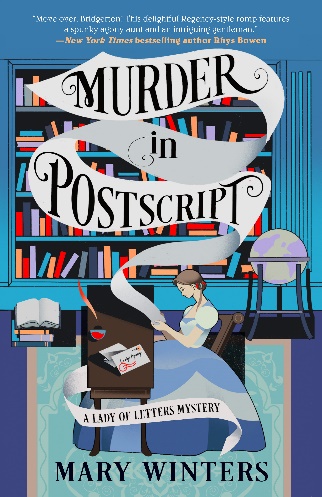
Murder in Postscript by Mary Winters

Publishes March 28-Berkley-Historical Mystery-320pp.

Grateful Reader Review by Dorothy Schwab

Mary Winters sets her newest novel, Murder in Postscript, in Victorian England. Amelia Amesbury, the lovely widow, mother, and countess, is the main character in the first of the Lady Agony Mystery Series.  Amelia, pen name Lady Agony, writes secretly for a London penny paper dishing out advice on topics from fashion to social faux pas. She waits anxiously for the post each day so she can retreat to the two-story library in the home she shared with her late husband Edgar and his young niece, Winifred, now like a daughter. The day Lady Agony receives a letter from a lady’s maid pleading, “I think my mistress was murdered,” is the day Lady Agony turns to solving a murder instead of giving advice.

Mary Winters’ characters are either likeable or unlikeable. Readers meet Amelia’s Aunt Tabitha, who is mostly unlikeable due to her overbearing attitudes regarding widowhood and constant comments to behave; reminding Amelia she has married into gentry and must meet certain expectations. Nagging and disapproving looks are her specialty. In contrast to Tabitha is the extremely likeable Lord Simon Bainbridge. He’s easy going, well mannered, and has a surprising, even unnerving sense of humor. As Winters “who done it” plot unfolds, she cleverly weaves an intricate trail for Amelia and Simon to follow as they attend costume balls, traipse to the London docks, and visit a crazy aunt in her English garden. While tracking down clues the Simon/Amelia relationship continues to ebb and flow while visiting chocolate shops and in carriage rides, keeping readers hopeful as they share empathy for each other’s pasts.

Each charming chapter opens with a letter to Lady Agony and the pearls of wisdom she so forthrightly imparts. With Winnifred’s recital to host and a killer still on the loose, Lady Agony’s last bit of advice is “do less and enjoy more!”  So, mind your manners and read Murder in Postscript, the first in The Lady Agony Mystery Series.

“Trust me.” Yours in Secret, Lady Agony

Murder in Postscript by Mary Winters

Publishes March 28-Berkley-Historical Mystery-320pp.

Excerpt

Winifred gave Amelia an impulsive hug, and Amelia breathed in the beautiful strawberry scent of the child. Edgar hadn’t given her love—­he wouldn’t risk passing on his degenerative condition— ­but he had given her his dear niece, and for that, Amelia would always be grateful.

When the girl was gone, Amelia took the letters into the library, her favorite room in the house. It was something else Edgar had given her that she’d enjoyed very much—­a home with books. While the Feathered Nest had plenty of room for dining and entertaining, it did not afford much room for books, just the special theatricals the family loved and performed. One of her favorite performances was Romeo and Juliet, probably because she and Grady were central characters. Most times her eldest sister, Penelope, took the lead roles. Indeed, Penelope was better at memorizing lines, but Amelia was better at improvising.

She stopped and inhaled a breath. The room smelled of cloves and paper and past cigars. Hundreds of leather-­bound tomes filled the wooden bookshelves that lined the two-­story room. She bypassed the books and made for the large rosewood desk, situated in a bright alcove of windows. It faced a dark green couch, striped chairs, and an ornate oval table. In a nearby corner was a smaller table, with heavy crystal glasses and fine liquor. And on the far wall was a grand stone fireplace, surrounded by two soft damask chairs, comfortable enough for reading and dozing. She’d spent many nights there doing just that.

Slice went the letter opener, revealing the contents for her eyes only. She scanned the penmanship: hurried, sloppy, and slightly smudged from tears. Definitely a relationship problem. Settling into her chair, she began to read the letter.

Dear Lady Agony,

You are a lady of repute. Please tell me what to do. I love the boy next door, but he’s unaware of my feelings. I am certain we possess a special bond, for he smiles at me so. But he’s going to ask another girl to marry him. He told me his plan on the way to the well. I stumbled away, confused, but how I longed to tell him the truth of my feelings. Am I too late?

Devotedly,

Too Late for Love

Amelia dunked her quill in the ink. This one was easy, a drop in the bucket of love letters. She began her response, which would be printed in the magazine. Readers’ letters weren’t included, and a good thing, too. Amelia had a feeling many writers would be embarrassed later by the emotion they’d poured into their requests.

Dear Too Late for Love,

It’s never too late for love. In fact, I prefer the old, and perhaps wiser, adage, Better Late than Never. In your case, it cannot be truer. You love the boy and are late to admit it. Yes. However, there is still time. He hasn’t asked anyone to marry—­yet. Best he knows your true feelings before he proceeds. Even if he does not reciprocate them, you will feel secure in the knowledge that you told him. And that is a feeling you can live with. The other is not.

Yours in Secret,

Lady Agony

The next letter was just as clear-­cut. It was from a reader who was jealous of her friend’s hair, though she didn’t say so outright. The letter accused the friend of spending too much time dressing her long, blonde, thick locks, but it was obvious to Amelia that the letter writer wished for the hair herself.

Another dunk into the inkwell, and Amelia was poised to respond.

Dear Hair, There, and Everywhere,

Some women are born with great hair. Others are born with great wit, vivacity, or kindness. Cultivate one of the latter. Or purchase a wig. The choice is just that simple.

Yours in Secret,

Lady Agony

She waited a moment before opening the last letter, savoring the unknown contents. It would be tomorrow afternoon before she received more letters, the mysteries that made up her day. Because of the popularity of the column, Grady made certain the letters arrived daily so that she wouldn’t fall behind.

She turned the envelope over in her hands, positioning it in front of the light. A few drops of spring sunshine shone through the windows, making burgundy flecks on the wall as it bounced off the nearby decanter of brandy. Soon a housemaid would be in to start a fire, to warm the chill brought on by the late afternoon. Then Amelia would enjoy a glass of sherry before dressing for dinner, a complicated affair that she had never quite mastered.

She noted the seal of the envelope had been hastily done. Dashed out at the last minute, perhaps, the letter might contain time-­sensitive information. Amelia unfolded the paper. The handwriting, no better than chicken scratch, was hard to decipher. Written at a slant, possibly in this morning’s rain burst, it was wrinkled and marked. Yet the writer’s desperation was clear from the first sentence. Amelia scanned the letter twice before dropping her quill, splattering ink on the desk. She grabbed her spectacles and read it a third time. Her eyes must be deceiving her. It was indeed dated this morning.

Dear Lady Agony,

You are my last hope, for I have nowhere else to turn. Could you meet me at St. James’s Park at nine o’clock this evening? Make sure no one follows you. I believe someone is following me. I’ll be at the bench by the pond. You will know me by my red hat. Please make every effort. I’ve witnessed something dreadful, and I fear the worst.

Devotedly,

Charlotte

Postscript: I think my mistress was murdered.

Excerpted from Murder in Postscript by Mary Winters Copyright © 2023 by Mary Winters. Excerpted by permission of Berkley. All rights reserved. 

SPOTLIGHT/EXCERPT: The Maid of Ballymacool by Jennifer Deibel

Publishing February 21, 2023, Revell Books, 352 pp, Historical Romance, Historical Fiction, Inspirational Fiction

Purchase links below

BOOK DESCRIPTION

Brianna Kelly was abandoned at Ballymacool House and Boarding School as an infant. She has worked there since she was a wee girl and will likely die there. Despite a sense that she was made for something more, Brianna feels powerless to change her situation, so she consoles herself by exploring the Ballymacool grounds, looking for hidden treasures to add to the secret trove beneath the floorboards of her room.

When Michael Wray, the son of local gentry, is sent to Ballymacool to deal with his unruly cousin, he finds himself drawn to Brianna, immediately and inescapably. There is something about her that feels so . . . familiar. When Brianna finds a piece of silver in the woods, she commits to learning its origins, with the help of Michael. What they discover may change everything.

Fan favorite Jennifer Deibel invites you back to the Emerald Isle in the 1930s for this fresh take on the Cinderella story, complete with a tantalizing mystery, a budding romance, and a chance at redemption.

The Maid of Ballymacool Excerpt

The table hadn’t been set? Of course, it wouldn’t have been. That was always the last thing Brianna did before retiring for the night. Mary would have done it, she was sure, so Magee must have instructed her not to. Brianna stood in the corridor looking from the kitchen door back to the direction of the dining room, torn on whether or not to deliver the food first or go back and bring the dishes and food all at one time. A stirring of footsteps overhead caught her attention. The girls were lining up and would be marching down the stairs any moment.

She scurried back to the kitchen, set down her tray, and loaded a second one with plates, cutlery, teacups, and serviettes. She propped the door open and then lifted the food and settled that tray into the crook of her right arm. Then, she carefully finagled the tray of dishes onto her left arm. The weight of them both nearly toppled her, but she steadied herself and made for the servants’ quarters. Taking care to roll her feet smoothly from heel to toe so as not to jostle anything, she kept her gaze on the entryway at the end of the long corridor.

Suddenly, the back door slammed open, and Brianna was flung against the wall. By some miracle, she managed to hang on to the tray of dishes, but the food toppled onto the floor with a sickening splat.

“Oh, good gracious me. I beg your pardon.” Mister Wray cupped her elbow with his hand and inclined his head to look at her face. “Are ya alright?”

She puffed at a strand of hair that had fallen over her face. “I’m fine.” She puffed again, but instead of helping, it frayed the strands, some of which curled into her eye. She clamped them shut against the sting.

“Allow me.” Tender fingers brushed the hair from her face, gently grazing her forehead and temple. Goose bumps prickled her skin at his touch. “There. Can you see now?”

Brianna blinked hard and forced herself to meet his gaze while heat crept up her cheeks. “Aye, thank you.” She knelt down, setting the tray of dishes carefully on the floor, then started picking up the broken pieces of pottery.

“No, no, please let me.” He knelt beside her and started scooping handfuls of porridge and eggs back onto the fallen tray. “’Tis my fault,” he added. “I was rushing to not be late to breakfast and carelessly neglected to look where I was going.”

Brianna opened her mouth to respond, but Magee flew around the corner and shrieked. “What have you done now, you amadán?”

Brianna blanched at the word. Being called a fool stung, but no more so than Magee’s use of Irish. Irish Gaelic was only allowed in certain circumstances within the walls of Ballymacool. “As a center of decorum and propriety, we will speak only proper, civilized English,” the headmistress had said when one of the boarders deigned to converse in her first language. Magee’s slip into her native tongue belied just how furious she was.

“My apologies, marm,” Brianna said. “Twas an accident.”

Magee’s lips clamped into a thin line. She planted balled fists on her hips. “I’m growing quite weary of hearing that from you, Brianna. And to add insult to injury, you’ve forced Mister Wray to help you.” She turned her attention to the man. “Please, sir, you mustn’t help her. This is a problem of her own making.”

Mister Wray stood, hands held in front of him, porridge dripping from his fingers. He studied the headmistress for a moment before responding. “I’m afraid you’re mistaken. It was I who ran into Brianna in my haste to be on time for breakfast. Therefore, ’tis only right that I be responsible for cleaning this mess.”

Fire flashed behind Magee’s eyes, and she scowled at Brianna. She opened her mouth to retort but closed it again when she looked back at her guest. A guest who, Brianna noticed, somehow still managed to be blindingly handsome even while covered in porridge.

Chapter 6, pages 62-65

From The Maid of Ballymacool © 2023, Jennifer Deibel, published by Fleming H. Revell Company

Jennifer Deibel is the author of A Dance in Donegal (winner of the Kipp Award for Historical Romance) and The Lady of Galway Manor (a Parable Group bestseller). Her work has appeared on (in)courage, on The Better Mom, in Missions Mosaic magazine, and in other publications. With firsthand immersive experience abroad, Jennifer writes stories that help redefine home through the lens of culture, history, and family. After nearly a decade of living in Ireland and Austria, she now lives in Arizona with her husband and their three children

PURCHASE LINKS:

AMAZON https://www.amazon.com/Maid-Ballymacool-Jennifer-Deibel-ebook/dp/B0B6Q1FHXY

BARNES & NOBLE https://www.barnesandnoble.com/w/the-maid-of-ballymacool-jennifer-deibel/1141540011

The Rose and the Thistle by Laura Frantz

Published January 3, 2023-Revell Books-Historical Fiction, Historical Romance, Inspirational Fiction-416 pp

The Grateful Reader Review by Dorothy Schwab

Religion and politics, taboo topics at social gatherings unless discussing The Rose and the Thistle by Laura Frantz! The English Lady Blythe Hedley, a brilliant linguist, too tall and willowy to be seen as beautiful; would rather spend money “on books rather than silks and ribbons.” Due to Jacobite/Catholic sympathies her father is considered an enemy of the British crown and rumored to be hiding in France. With Blythe’s protection and possible matrimony in mind, he contacts Lord Hume, Blythe’s godfather, a long-lost connection between families.  The request is for Blythe to be sequestered at Wedderburn Castle across the border in Scotland- a protestant stronghold.  There you have it-the Catholic Tories vs. Protestant Whigs. Laura Frantz weaves the vast history of the 1715 Jacobite Rebellion and the unwanted arrival, but undeniable chemistry between Lady Blythe and hero, Everard Hume, into a luscious romantic tapestry.

Everard Hume declares he is seeking a Scottish lass to marry, not an Englishwoman. In emotionally charged scenes with his dying father, immensely tall and foreboding Everard, slowly evolves into a thoughtful, caring Lord of Wedderburn Castle. Frantz’s tender portrayal of the new Lord Hume, carrying youngest brother, Orin, on his shoulders at his father’s funeral, and giving generous bonuses and support to the castle staff, lends depth to Everard’s changing feelings, endearing him to readers.   

Blythe is involved in a tug of war between heart and head as she cannot let go of her mother’s past as a courtesan in the court of King Charles II. Frantz combines this past memory with Blythe’s longings to be loved for herself, not her assets. The blossoming connection between Lady Blythe and young Orin adds to the suspense involved with her father and the coming rebellion.

From chapters opening with quotes from the Bible, former kings, and famous poets to the vivid sensory descriptions of Edinburgh, Highlands and the Lowlands, readers are immersed in the Scottish landscape. England’s white rose, embroidered into hems and handkerchiefs and Scotland’s thistle, a badge of honor and symbol of heraldry for over 500 years, are royally and historically represented in Laura Frantz’s The Rose and the Thistle.

BOOK DESCRIPTION:

In 1715, Lady Blythe Hedley’s father is declared an enemy of the British crown because of his Jacobite sympathies, forcing her to flee her home in northern England. Secreted to the tower of Wedderburn Castle in Scotland, Lady Blythe awaits who will ultimately be crowned king. But in a house with seven sons and numerous servants, her presence soon becomes known.


No sooner has Everard Hume lost his father, Lord Wedderburn, than Lady Hedley arrives with the clothes on her back and her mistress in tow. He has his own problems–a volatile brother with dangerous political leanings, an estate to manage, and a very young brother in need of comfort and direction in the wake of losing his father. It would be best for everyone if he could send this misfit heiress on her way as soon as possible.


Drawn into a whirlwind of intrigue, shifting alliances, and ambitions, Lady Blythe must be careful whom she trusts. Her fortune, her future, and her very life are at stake. Those who appear to be adversaries may turn out to be allies–and those who pretend friendship may be enemies.

EXCERPT

The Rose and the Thistle Chapter 1, pages 11-14


“How fetching you look in your pale green gown, La Belle Hedley. Akin to a stalk of
celery,” Catherine teased, knowing Blythe didn’t give a fig for fashion and lamented her
height, exceeding most of the court’s gallants. “And though you may roll your eyes at
me for saying so, there’s no doubt you are the best-dressed woman here and have set
French society afire.”
’Tis not my fashion sense but my mother’s reputation that has done so. “I would rather
spend it all on books than silks and ribbons,” Blythe replied. But her dear father wouldn’t
let her. The duke was far more matrimonially minded than she. And given she lacked
any outward beauty save her garments, fashion was her one asset.
“You are unquestionably a la mode.” Catherine openly admired Blythe’s flawless
coiffure styled into pale coils over one bare shoulder and adorned with beribboned
rosettes. “I’ve heard the Duchess d’Orleans covets your hairdresser while Mary of
Modena covets your gems.” Her hazel eyes slid to the choker of sapphires around
Blythe’s throat and the ones set in silver and pearl adorning her ears. “Not paste gems
but true brilliants. I suppose they were your mother’s. Such a blinding, bewitching blue.”
Blythe touched an earring absently. “But how ridiculous I feel in red heels.” She looked
down at her new slippers in bemusement before reaching into her pocket. With a
practiced snap of her wrist, she unfurled a painted fan encrusted with tiny precious
stones, a gift from Catherine’s aunt, lady of the queen’s bedchamber.
Blythe tallied how many days she’d been exiled to—visiting—France. Sixty-three?
She and Catherine strolled on with no apparent aim beneath the strengthening spring
sun, their hooped, colorful skirts swaying in the breeze. “We’ve walked these paths for
weeks now.” The lament in Catherine’s tone was telling. “And not one glimpse of my
kindred, the ousted prince.”
Blythe’s gaze swept the manicured grounds as though James Francis Edward Stuart
would materialize before their eyes. Charming and highly polished, the would-be James
III of England and James VIII of Scotland was the catch of the continent—if he could
only regain his crown.
His Royal Highness remains in Lorraine,” Blythe said quietly. Much could be learned by
listening, as gossip and intrigue buzzed. at every turn. “He seeks a royal bride. One who
is wealthy and polished and—”
“That would be you.” Catherine cast her a knowing look.
“Alas, I lack the requisite curves and double chin, plain as I am,” Blythe replied with a
flutter of her fan. The foremost courtiers were voluptuous, sensuous women with heavily
rouged cheeks and lips, sporting beauty patches in myriad places.
“Ha! Beauty is in the eye of the beholder, is it not?”

“Most men of my acquaintance seem preoccupied with face, form, and fortune, in that
order. Yet I long to be loved for myself and nothing else.”
A shadow passed over Catherine’s porcelain-perfect features. “Though you profess to
being plain, there is no denying you are the Duke of Northumbria’s daughter.”
Blythe squinted as the sun strengthened. Not just his daughter. His only daughter—and
only child. The whole weight of the Northumbrian fortune and future was upon her. If
she failed to marry, failed to provide an heir . . .
“Alas, a duke’s daughter of scandalous lineage.”
Catherine raised slender shoulders in a shrug. “’Twas long ago and best forgotten.”
“Then needs be I find a man of dim memory and even greater purse than my beloved
father.”
“How few nobles fit, including our impoverished if dashing Stuart prince.” Catherine
sighed. “I fear we shall all be branded spinsters if we leave France unaffianced.”
“Marriage is not a right, nor is singleness a curse.” Blythe’s fan fluttered harder. “I’ve
been pondering other paths, like becoming a nun and joining a convent in Flanders or
Chaillot. Perhaps a contemplative order like the English Augustine nuns at Bruges.”
“Don’t you dare!” Catherine gave a vicious pinch to Blythe’s arm as if to bring her to her
senses. “You have too much to offer to shut yourself away so.”
Stung but in no mood to argue, Blythe made no reply.

From The Rose and the Thistle © 2023, Laura Frantz, published by Revell

PURCHASE LINKS:

AMAZON:https://www.amazon.com/Rose-Thistle-Novel-Laura-Frantz-ebook/dp/B0B6PXDPWM/

BARNES & NOBLE: https://www.barnesandnoble.com/w/the-rose-and-the-thistle-laura-frantz/1141496563?ean=9780800740672

Christy Award-winning author, Laura Frantz, is passionate about all things historical, particularly the 18th-century, and writes her manuscripts in longhand first. Her stories often incorporate Scottish themes that reflect her family heritage. She is a direct descendant of George Hume, Wedderburn Castle, Berwickshire, Scotland, who was exiled to the American colonies for his role in the Jacobite Rebellion of 1715, settled in Virginia, and is credited with teaching George Washington surveying in the years 1748-1750. Proud of her heritage, she is also a Daughter of the American Revolution. When
not at home in Kentucky, she and her husband live in Washington State.

Godmersham Park by Gill Hornby

Publication November 1, 2022- Pegasus Books: 416 pp. Historical Fiction, Biographical Historical Fiction, “Austenesque”

BOOK DESCRIPTION
A richly imagined novel inspired by the true story of Anne Sharp, a governess who became very close with Jane Austen and her family by the #1 International bestselling-author of Miss Austen.

On January 21, 1804, Anne Sharpe arrives at Godmersham Park in Kent to take up the position of governess. At thirty-one years old, she has no previous experience of either teaching or fine country houses. Her mother has died, and she has nowhere else to go.

Anne is left with no choice. For her new charge—twelve-year-old Fanny
Austen—Anne’s arrival is all novelty and excitement. The governess role is a uniquely awkward one. Anne is neither one of the servants, nor one of the family, and to balance a position between the “upstairs” and downstairs” members of the household is a diplomatic chess game. One wrong move may result in instant dismissal. Anne knows that she must never let down her guard.

When Mr. Edward Austen’s family comes to stay, Anne forms an immediate attachment to Jane. They write plays together and enjoy long discussions. However, in the process, Anne reveals herself as not merely pretty, charming, and competent; she is clever too. Even her sleepy, complacent, mistress can hardly fail to notice.

Meanwhile Jane’s brother, Henry, begins to take an unusually strong interest in the
lovely young governess. And from now on, Anne’s days at Godmersham Park are
numbered.

The Grateful Reader Review by Dorothy Schwab

In Godmersham Park Gill Hornby shares Anne Sharpe’s abrupt entrance into the Victorian world of working women. After the death of her mother, Anne is informed by her family’s “man of business” that she must vacate her home and live on a stipend of 35 pounds per year. Readers are immediately drawn to this emotional truth and curious how this beautiful, charming, indulged, only child will deal with such news. The solution is the position of governess in the Austen household. As Anne meets the mistress for the first time, her constant second guessing of responses and possible implications of appearing “forward, impertinent or grasping” reveals the sensibilities of the time and the insecurities Anne harbors. Her anxieties and excruciating headaches are another emotional tug for readers.

Upon entering the palatial Godmersham Park, Anne is excited to see the grand rooms so perfect for ‘theatricals’ until she realizes, not being a real part of the family, her quarters are in the attic. This insightful foreshadowing of Anne’s role in planning activities and writing scripts for plays involving the other eight children is evidence of Hornby’s superb prose.  Hornby brings the Victorian home to life by gently weaving Anne’s hectic daily schedule with the delicately balanced interactions of the household staff and the children in their care.  

Gill Hornby’s characters are richly drawn from her own research and diaries kept by Fanny Austen. The deep bond Anne forged with twelve-year-old Fanny over two years as governess is a forever balm for her grieving heart. Anne’s friendships and activities with Jane Austen and her very popular brother, Henry, reveal angst, suspense, and later her playful wit and writing skills. These relationships within the Austen family keep readers sipping tea and turning pages; thrilled with Gill Hornby’s engaging glimpse into Victorian life at Godmersham Park.

Order Here: Barnes & Noble https://www.barnesandnoble.com/w/godmersham-park-gill-hornby/1140975453

Amazon: Kindle: https://www.barnesandnoble.com/w/godmersham-park-gill-hornby/1140975453

Gill Hornby is the author of the novels Miss Austen, The Hive, and All Together Now,
as well as The Story of Jane Austen, a biography of Austen for young readers. She lives
in Kintbury, England, with her husband and their four children.

The Belle of Belgrave Square: Belles of London-Book 2

Publication October 11, 2022-by Berkley Romance Genre: Historical Romance, Historical Fiction

The Grateful Reader Review by Dorothy Schwab

The Belle of Belgrave Square, book 2 in The Belles of London series, is a treat for fans of Historical Romance with a splash of fairy tale elements. Reminiscent of Beauty and the Beast, watch for good vs. evil, problems to be solved, supernatural beings, and the element of three. Don’t forget the moral and happy ending!

Main character, Captain Jasper Blunt, a battle-scarred soldier from the Crimean War, is considered a war hero, but is he good or evil? Mimi weaves in just enough of his hidden past to keep readers guessing. The beautiful Julia Wychwood, critically impaired by anxiety and her wealthy, invalid parents is imprisoned at Belgrave Square. Deprived of pets, except for her beloved horse, Cossack, Julia gains confidence through riding. Her anxiety is relieved by reading, stashing a novel into her reticule and escaping into libraries when attending parties. Readers will admire this Victorian girl’s resourceful spunk!

Problems are twofold. Captain Blunt needs a wealthy wife’s dowry to restore his dilapidated estate in Yorkshire, and Julia is desperate to escape the evil Dr. Cordingley, whose bloodletting is slowly killing her. Mimi Matthews’ tale is filled with the harrowing details of Julia’s daily life and the heartwarming descriptions of Captain Blunt’s eventful life with children and limited, aging staff at Goldfinch Hall.

Captain Blunt’s children fulfill the element of three and his allegedly haunted Goldfinch Hall, the supernatural.  Like the thick, luscious plaits in Julia’s hair, Mimi has braided the Captain’s secrets into the plot and readers will be as anxious as Julia while searching for reasons to believe in him. Seeking lessons learned and hoping for a happy ending make The Belle of Belgrave Square as fulfilling as a favorite fairy tale.

USA Today bestselling author Mimi Matthews writes both historical nonfiction and award-winning proper Victorian romances. Her novels have received starred reviews in Publishers Weekly, Library Journal, Booklist, and Kirkus, and her articles have been featured on the Victorian Web, the Journal of Victorian Culture, and in syndication at BUST Magazine. In her other life, Mimi is an attorney. She resides in California with her family, which includes a retired Andalusian dressage horse, a Sheltie, and two Siamese cats.

PURCHASE LINKS:

BOOKSHOP.ORG: https://bookshop.org/books/the-belle-of-belgrave-square/9780593337158

BARNES & NOBLE: https://www.barnesandnoble.com/w/the-belle-of-belgrave-square-mimi-matthews/1140838943

AMAZON: https://www.amazon.com/Belle-Belgrave-Square-Belles-London-ebook/dp/B09Q8H5VB4

Along Came a Lady by Christi Caldwell

Christi Caldwell is the USA Today bestselling author of the Sinful Brides series and the Heart of a Duke series. She blames novelist Judith McNaught for luring her into the world of historical romance. When Christi was at the University of Connecticut, she began writing her own tales of love—ones where even the most perfect heroes and heroines had imperfections. She learned to enjoy torturing her couples before they earned their well-deserved happily ever after. Christi lives in Charlotte, North Carolina where she spends her time writing, and being a mommy to the most inspiring little boy and empathetic, spirited girls who, with their mischievous twin antics, offer an endless source of story ideas! http://christicaldwell.com/

The Grateful Reader Review by Dorothy Schwab

Edwina Dalrymple, rejected daughter of an Earl, is an independent woman building a career preparing debutantes to enter London society in 1815. Edwina has accrued a great resolve over the years that has given her strength to succeed, despite her secrets. The Duke of Bentley, of immense power and wealth, has offered Edwina a great sum of money to travel to a Staffordshire coal mining village to convince his eldest son, unacknowledged for over thirty years, to return to London society. Edwina finds proud Rafe Audley has climbed the ranks in the coal mine since he was 8 years-old, bearing the burden of supporting his siblings, with selfishness and harboring hatred and resentment for the father who sired him. This “Professor Higgins” challenge becomes a “war of wits” between Edwina and Rafe. Author Christi Caldwell shares an excellent opinion of the elite from a commoner’s view and while secrets are revealed, Caldwell still creates doubt all through the “war” regarding Edwina’s chances for success. With foreshadowing of how Rafe could use his power to effect change, readers will enjoy a heart-pounding sprint to the finish.

Christmas with the Cornish Girls by Betty Walker

Publishing November 25, 2021

A heartwarming tale of sisterhood in wartimeIt’s 1941, and Christmas is approaching in St. Ives…

To Pre-Order: https://www.harpercollins.com/products/christmas-with-the-cornish-girls-the-cornish-girls-series-betty-walker?variant=39649409368098

Betty Walker lives in Cornwall with her large family, where she enjoys gardening and coastal walks. She loves discovering curious historical facts, and devotes much time to investigating her family tree.

She also writes under other names! She writes thrillers as Jane Holland, romance as Beth Good, and YA fantasy as Victoria Lamb. (Goodreads)

The Grateful Reader Review by Dorothy Schwab

Christmas is coming to Cornwall, England, no matter the war and air raids. Betty Walker continues The Cornish Girls Series with an attentive, warm-hearted glimpse into the lives and struggling relationships of Lily and Eva as they move from the top-secret listening post in Porthcurno up the coast to Symmonds Hall in St. Ives. Walker creates excellent backstory of the personalities and past of each character, so readers feel connected without reading Book #1, Wartime with the Cornish Girls. (Though a great read and highly recommended!)

Symmonds Hall is staffed by two doctors and several rule abiding nurses. Next door is an orphanage run by the Treverricks, whose “parenting” techniques are highly questionable. A love triangle, the orphanage, and the children in the Treverrick’s care become a personal challenge for Nurse Rose. Betty Walker’s focus deftly shifts back and forth from developing adult relationships to the orphans’ tenuous situation.

With December 1941 approaching, Lily is tasked with organizing the annual Christmas party! Lily’s and Eva’s days are filled with a wheelchair bound patient, a burn victim, a pregnant visitor, and orphan rescue missions! Meanwhile, it’s an emotional relief to be involved in Lily’s party preparations-dicey at best, with paper chains and rationing.

Christmas with the Cornish Girls reminds readers “that when things are at their darkest, love comes along to light the way.”